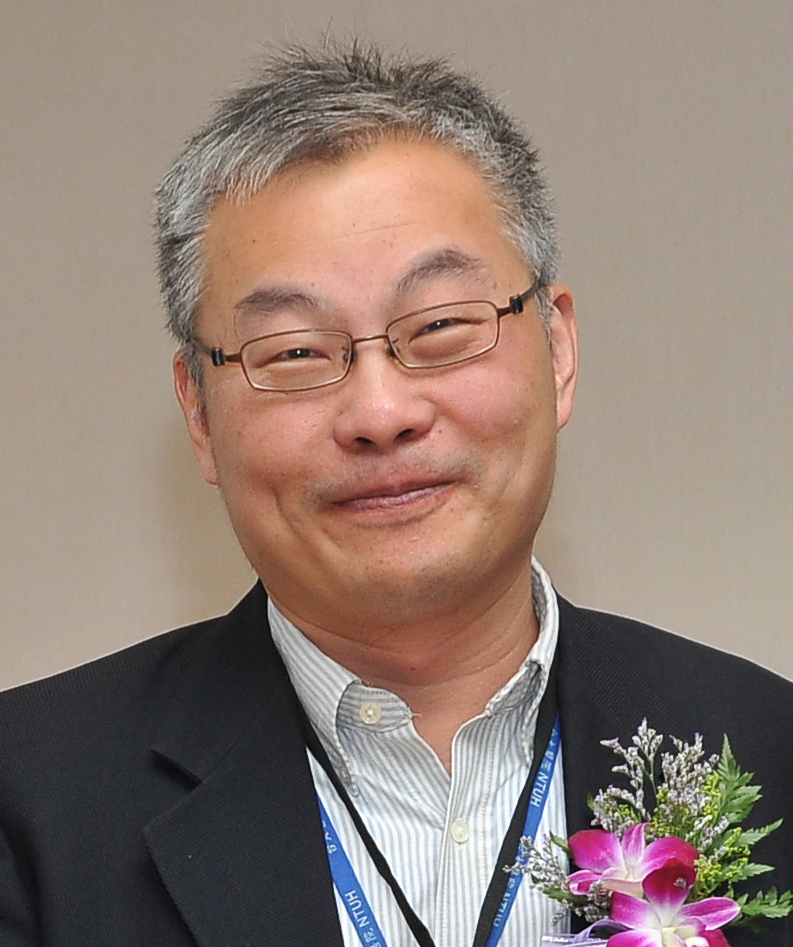
Pei-Lung Chen, MD, PhD is a physician-scientist and Professor at the Graduate Institute of Medical Genomics and Proteomics, National Taiwan University (NTU), and an Attending Physician in the Departments of Medical Genetics and Internal Medicine, National Taiwan University Hospital (NTUH). He also serves as Director of the NTUH Laboratory of Molecular Genetic Diagnostics, where he leads next-generation sequencing (NGS)–based clinical genetic testing and translational precision medicine initiatives.
Dr. Chen received his MD from NTU and his PhD in Human Genetics and Molecular Biology from the Johns Hopkins University School of Medicine. He is a practicing endocrinologist and medical geneticist, providing care for patients with endocrine disorders, inherited metabolic and genetic diseases, and complex conditions requiring integrated genomic evaluation. His clinical practice emphasizes accurate molecular diagnosis, genotype-informed risk assessment, and evidence-based clinical decision-making.
Dr. Chen is an active member of a multidisciplinary healthcare team providing comprehensive care for transgender individuals, where he serves as the endocrinologist responsible for hormone-related evaluation, initiation, and long-term management within a team-based, patient-centered care model.
In parallel with his clinical work, Dr. Chen leads the development and implementation of precision genomic testing strategies at NTUH, including targeted NGS panels, whole-exome and whole-genome sequencing, and rigorous variant interpretation frameworks. His research interests include immunogenomics (HLA, KIR, and germline genes encoding AIRR), pharmacogenomics, malignant hyperthermia, and endocrine-related inherited diseases. He also employs model organisms, including mouse models, to investigate disease mechanisms and therapeutic responses.
Through the close integration of endocrinology, genetic medicine, and genomics, Dr. Chen is committed to advancing precision medicine and improving patient outcomes.
22 MARCH
| Time |
Session |
|
|
11:00
12:30
|
Novel Treatment and Diagnostic Approaches for Thyroid Cancer in Post-NGS Era
-
Won Gu KimSouth Korea
Speaker
Advances in the Treatment of Radioactive Iodine-Refractory Differentiated Thyroid Cancer: Multikinase Inhibitors and Beyond – An Asian PerspectiveDifferentiated thyroid cancer (DTC) arising from follicular cells generally has a good prognosis; however, about 5-10% of patients experience recurrence or distant metastasis. High-dose radioactive iodine (RAI) therapy is the mainstay of treatment for metastatic DTC, but its efficacy depends on the iodine avidity of the tumor. Iodine uptake of metastatic lesions tends to decline over time, and ultimately, around 60-70% of metastatic cases become refractory to RAI therapy. Patients whose metastases remain RAI-avid have a median survival approaching 10 years, whereas those with RAI-refractory disease have a roughly 10% of 10 10-year survival. Because the clinical course of RAI-refractory DTC is variable, it is critical to determine which patients should receive systemic therapy with a tyrosine kinase inhibitor (TKI) and how to integrate local treatment before and during systemic therapy.
TKIs such as sorafenib and lenvatinib, which primarily inhibit tumor angiogenesis, have been approved. The DECISION trial reported that sorafenib achieved a median progression-free survival (PFS) of 10.8 months compared with 5.8 months in the control group. The SELECT trial showed that lenvatinib achieved a median PFS of 18.3 months versus 3.6 months in controls. Based on these results, sorafenib and lenvatnib are now widely used as the first-line treatments for patients with RAI-refractory DTC who have progressive or symptomatic metastatic disease. A recent multi-center real-world study in Korea suggested that lenvatinib provides better efficacy and longer PFS (median 35.3 months) than sorafenib (median 13.3 months, p<0.001). However, lenvatinib is also associated with higher rates of adverse events such as hypertension (95%) and proteinuria (80%). These TKIs show activity irrespective of the underlying genetic alterations that drive thyroid cancer.
Recently, selective NTRK and RET inhibitors have been developed for solid tumors harboring NTRK or RET gene fusions, and their efficacy has been confirmed in clinical trials. In addition, genetic testing to identify actionable mutations is increasingly being incorporated into practice, and personalized treatment approaches are reflected in current clinical guidelines. A recent Korean multicenter study found that approximately 31% of patients with RAI-refractory thyroid cancer who had wild-type BRAF carried targetable gene fusions. The choice and sequencing of TKI, the optimal timing of their use, strategies to prevent and manage adverse events, and individualized treatment plans based on patient characteristics will be crucial for improving clinical outcomes in patients with RAI-refractory thyroid cancer.
-
Young Joo ParkSouth Korea
Speaker
Translating the Genetic Landscape of Thyroid Cancer to Precision Diagnosis and TherapyThyroid cancer is characterized by a relatively low mutational burden compared with other solid tumors, with recurrent alterations mainly involving BRAF, RAS, and various fusion genes. Several novel driver candidates have also been identified through next-generation sequencing studies. The frequency and pattern of these genomic alterations differ across thyroid cancer subtypes and are often associated with distinct histopathological phenotypes, providing valuable clues for differential diagnosis. Moreover, molecular subtypes defined by driver mutations are closely linked to tumor biology and clinical behavior, allowing more accurate prediction of disease aggressiveness and prognosis.
Most differentiated thyroid cancers (DTCs) harbor a single dominant driver alteration; however, acquisition of additional mutations such as TERT promoter, tumor suppressor genes, or PI3K–AKT pathway alterations may lead to dedifferentiation and progression to aggressive or metastatic disease. Advances in our understanding of these genetic alterations have refined the pathological classification of thyroid cancer and enabled improved prognostication, treatment selection, and follow-up strategies.
Importantly, the identification of actionable genetic alterations—including RET and NTRK fusions, as well as BRAF mutations—has revolutionized therapeutic approaches. Targeted agents such as selpercatinib, pralsetinib, larotrectinib, and entrectinib demonstrate substantial clinical efficacy with fewer adverse events than multikinase inhibitors, while dabrafenib plus trametinib has shown marked benefit in anaplastic thyroid cancer. With multiple targetable mutations being uncovered, incorporating comprehensive genomic testing into the diagnostic workflow is essential to guide precision therapy for patients with thyroid cancer.
-
He-Jiun JiangTaiwan
Speaker
Redifferentiation Strategies in Refractory Thyroid Cancer: First Insights from TaiwanBackground: Patients with BRAF p.V600E-mutated radioactive iodine-refractory differentiated thyroid cancer (RAIR-DTC) face a poor prognosis. While MAPK pathway inhibition can restore radioiodine (RAI) avidity, standard full-dose protocols (e.g., MERAIODE) are often associated with significant toxicity (Grade 3/4 adverse events >20%). This study investigates the efficacy and safety of a novel low-dose, pulsed redifferentiation strategy in a real-world Asian cohort.
Methods: We conducted a retrospective cohort study of 24 patients with metastatic BRAF p.V600E RAIR-PTC. Patients received a 60-day induction regimen of Dabrafenib (75 mg BID) and Trametinib (2 mg QOD, every other day). A "Treat-All" strategy was employed, omitting diagnostic scanning to avoid stunning effects, followed by a fixed therapeutic dose of 131-I (150-200 mCi). Primary endpoints included RAI uptake restoration, objective response rate (ORR), disease control rate (DCR), and safety profile.
Results: RAI avidity was restored in 83.3% of patients. The regimen demonstrated an exceptional safety profile without Grade 3/4 adverse events. While the ORR was 16.7%, the DCR reached 83.3% at 6 months. Age <55 years was identified as the most significant predictor for objective tumor regression (p=0.007). Furthermore, the study highlights the clinical value of "TKI-Free Survival," with 88.9% of prior TKI users achieving a sustained drug holiday.
Conclusion: The low-dose, pulsed BRAF/MEK inhibition protocol offers a highly tolerable and effective redifferentiation strategy. While tumor shrinkage is less pronounced than with full-dose regimens, the high rate of disease control and excellent safety profile make it a viable option for stabilizing disease and improving quality of life, particularly for younger patients (<55) or those intolerant to standard TKI therapy.
201BC
|
|
14:00
15:30
|
Hormone Therapy in Transgenders
-
Wayne Wing Ki TangHong Kong, China
Speaker
Psychiatric Perspectives in Gender-Affirming CareThe psychiatrist plays a fundamental role in the multidisciplinary care of transgender and gender-diverse individuals, moving beyond traditional gatekeeping to provide supportive assessment and mental health care alongside the initiation of hormonal therapy.
This presentation outlines the key psychiatric considerations in providing holistic care for this population, offering a complementary perspective to the endocrinologist's work within culturally specific service settings.
We will review the current diagnostic framework (ICD-11 Gender Incongruence) and the practical aspects of the pre-/peri-treatment psychiatric consultation. The focus will be on understanding the individual’s unique gender journey and identifying co-occurring mental health conditions or psychosocial stressors that may benefit from concurrent support during medical transition.
Furthermore, we will discuss the longitudinal intersection between medical intervention and mental health. While Gender-Affirming Hormone Therapy (GAHT) is effective in alleviating gender incongruence and often reduces distress, clinical experience and local data suggest that medical transition alone may not universally resolve concurrent depressive or anxiety symptoms. We will briefly illustrate this using recent findings from a Hong Kong cohort, which highlight that while gender congruence improves with hormonal treatment, psychological well-being is often more closely linked to psychosocial stressors.
The session concludes by exploring how psychiatrists and endocrinologists can collaborate to support patients who face these ongoing challenges, ensuring a safe and sustainable transition process.
-
Brendan NolanAustralia
Speaker
Gender-Affirming Hormone Therapy for Transgender and Gender Diverse AdultsGender-affirming hormone therapy (GAHT) is used by many transgender and gender-diverse adults to align physical characteristics with their gender identity, reduce gender incongruence and improve psychological functioning. This presentation will provide an overview of the initiation and monitoring of GAHT in trans adults. Trans individuals treated with testosterone typically receive standard testosterone doses and formulations recommended for cisgender men, whereas those receiving estradiol-based GAHT are typically treated with estradiol in combination with an anti-androgen in those without orchidectomy. Proactive monitoring and mitigation of cardiovascular risk factors is pertinent in all trans adults and bone health is an important consideration in those using estradiol-based GAHT.
-
201BC
|