Cheng Hsuan TsaiDr. Taiwan
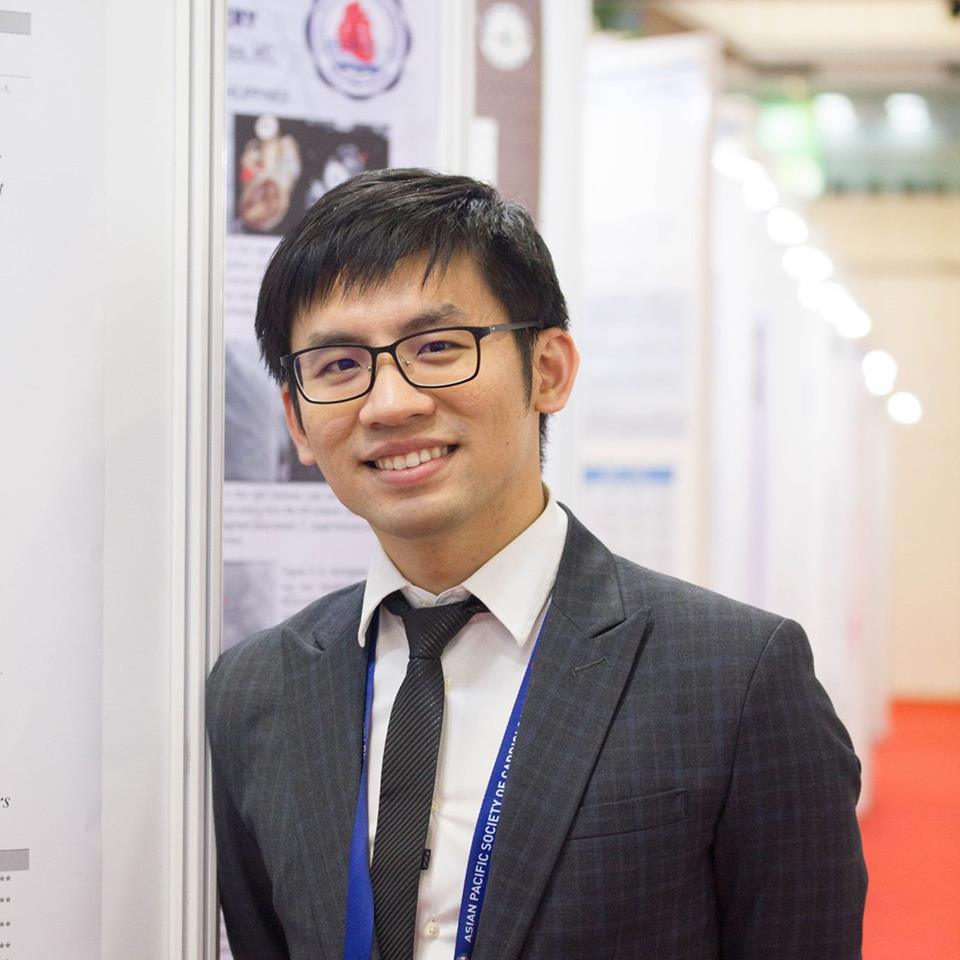
Cheng-Hsuan Tsai, MD, is a cardiologist and Assistant Professor at National Taiwan University Hospital. His research centers on aldosterone physiology, hypertension, and cardiovascular remodeling, with a particular focus on the clinical and pathophysiological implications of primary aldosteronism.
21 MARCH
| Time | Session |
|---|---|
|
13:30
15:00
|
Practical Updates for Screening, Diagnosis, and Treatment
Edith ChowHong Kong, China
Moderator
Personalizing Hypertension Treatment through Renin-Angiotensin-Aldosterone Physiology: Are We There Yet?Hypertension is the leading cardiovascular risk factor accounting for the global burden of cardiovascular disease and death. Renin-angiotensin-aldosterone-system takes a crucial role as the regulator in maintaining the body’s electrolyte homeostasis. RAAS overactivity is a key pathophysiological mechanism in hypertension. Dysregulation of the RAAS is closely tied to development of hypertension.
Primary aldosteronism is a disorder characterised by renin-independent aldosterone excess, manifesting as hypertension with greater risk of end-organ damage compared to individuals with essential hypertension. Recent guidelines for hypertension and primary aldosteronism have uniformly advocated for an expanded screening strategy for primary aldosteronism to improve awareness and detection of this treatable secondary cause of hypertension.
Traditionally, screening for primary aldosteronism has relied on the conception that it is a dichotomous condition. However, increasing evidence have suggested that renin and aldosterone abnormalities may exist on a continuum of clinical severity. In individuals with elevated blood pressure and family history of hypertension, higher levels of aldosterone are associated with greater risks of incident hypertension. Among normotensive individuals, the association between high aldosterone and incident hypertension were only evident among those with a suppressed renin, suggesting a phenotype of subclinical aldosterone excess. On the other hand, among individuals with resistant hypertension, targeting RAAS overactivity with mineralocorticoid antagonists have demonstrated superior blood pressure reduction compared to beta-blockers or alpha-blockers, especially in those with lower renin levels. With the development of novel treatments for hypertension that target RAAS, including aldosterone synthase inhibitors and non-steroidal mineralocorticoid inhibitors, there is growing interest in the role of RAAS hormones or metabolites as biomarkers to guide diagnosis, prognostication and management of hypertension.
Building upon this foundation, this talk will explore the potential role of aldosterone, renin and their metabolites as biomarkers in diagnosing and treating individuals with hypertension.
Hirotaka ShibataJapan
Moderator
2026 Update in Primary AldosteronismPrimary aldosteronism (PA) is one of the most prevalent causes for secondary hypertension. Early diagnosis and treatment are mandatory, because patients with PA present markedly higher morbidity of cardiovascular diseases than those with essential hypertension whose blood pressure levels are equally managed. A recently published Endocrine Society Clinical Practice Guideline of PA emphasizes several points. First, screening for PA with serum/plasma aldosterone concentration and plasma renin (concentration or activity) is recommended in all individuals with hypertension. Second, in individuals who screen positive for PA, aldosterone suppression testing is suggested when screening results suggest an intermediate probability for lateralizing PA, but not all cases. Third, in individuals with PA, medical therapy or surgical therapy with the choice of therapy based on lateralization of aldosterone hypersecretion and candidacy for surgery. Fourth, in individuals with PA considering surgery, adrenal lateralization with CT scanning and adrenal venous sampling prior to deciding the treatment approach is suggested. Fifth, in individuals with PA receiving PA-specific medical therapy, mineralocorticoid receptor antagonists (MRAs) are suggested as the dose is titrated by monitoring potassium, renal function, renin (concentration or activity) and blood pressure response during follow-up. We should be aware that diversity exists with respect to aldosterone assays, cut-off values for screening and aldosterone suppression tests, AVS standardization issues, and choice of MRAs depending on countries.
Diagnosis and Management of Adrenal InsufficiencyThe diagnosis and management of adrenal insufficiency presents major clinical challenges. It is often unrecognized, which can lead to adrenal crisis and, if not identified and treated, death. There is a lack of understanding on who is at risk of adrenal insufficiency, how to test for it, and how to manage a life threatening adrenal crisis promptly. While primary and secondary adrenal insufficiency can be regarded as rare conditions, glucocorticoid-induced adrenal insufficiency might be quite common. One should consider glucocorticoid withdrawal syndrome that may occur during glucocorticoid taper. Patient education in raising awareness of glucocorticoid withdrawal syndrome, such as fatigue and reduced appetite, is important when tapering glucocorticoid doses. The symptoms of glucocorticoid withdrawal syndrome may resemble adrenal insufficiency, but HPA axis is normally functional. The degree and persistence of adrenal suppression after cessation of glucocorticoid therapy are dependent on overall exposure and recovery of adrenal function varies greatly among individuals. Upcoming ICE2026/JES2026: Enlightened Endocrinology in Unprecedented TimesWe are pleased to announce that the 22nd International Congress of Endocrinology (ICE2026) and the 99th Annual Congress of the Japan Endocrine Society (JES2026) will be held together at the Kyoto International Conference Center (ICC Kyoto) over five days from June 2 (Tue) to 6 (Sat), 2026 (ICE2026/JES2026).
The International Congress of Endocrinology (ICE) is held every two years, and after 1988 and 2010, this will be the third time that the Congress will be held in Japan. The Japan Endocrine Society (JES) has been actively involved in the International Society of Endocrinology (ISE) since its establishment, and as the JES will celebrate its 100th anniversary in fiscal year 2026, hosting the congress in Japan will be an especially valuable opportunity for JES members.
The theme of ICE2026/JES2026 is: Enlightened Endocrinology in Unprecedented Times. Globally, we are entering an unprecedented era, including digitalization, which has been rapidly accelerated by the experience of the COVID-19 pandemic; a super-aging society, which is mainly faced by developed countries; and extreme weather events, as exemplified by global warming. In the midst of these unprecedented times, we will gather in Kyoto - the birthplace of the Japan Endocrine Society - to discuss the new century of clinical and basic research in various fields of endocrinology.
Participants from all over the world are encouraged to present cutting-edge science from their respective countries, and through active discussions, we hope that you will experience the “Enlightened Endocrinology” of endocrinology in this unprecedented era.
In June, flowers bloom profusely at shrines and temples in Kyoto with the blessings of water, and shrine gardens and hydrangea gardens are open to the public.
We look forward to welcoming participants from all over the world to Kyoto - the ancient capital of Japan - and discussing the future of endocrinology!
103
|