
Saeed Ahmed MaharProf. Pakistan
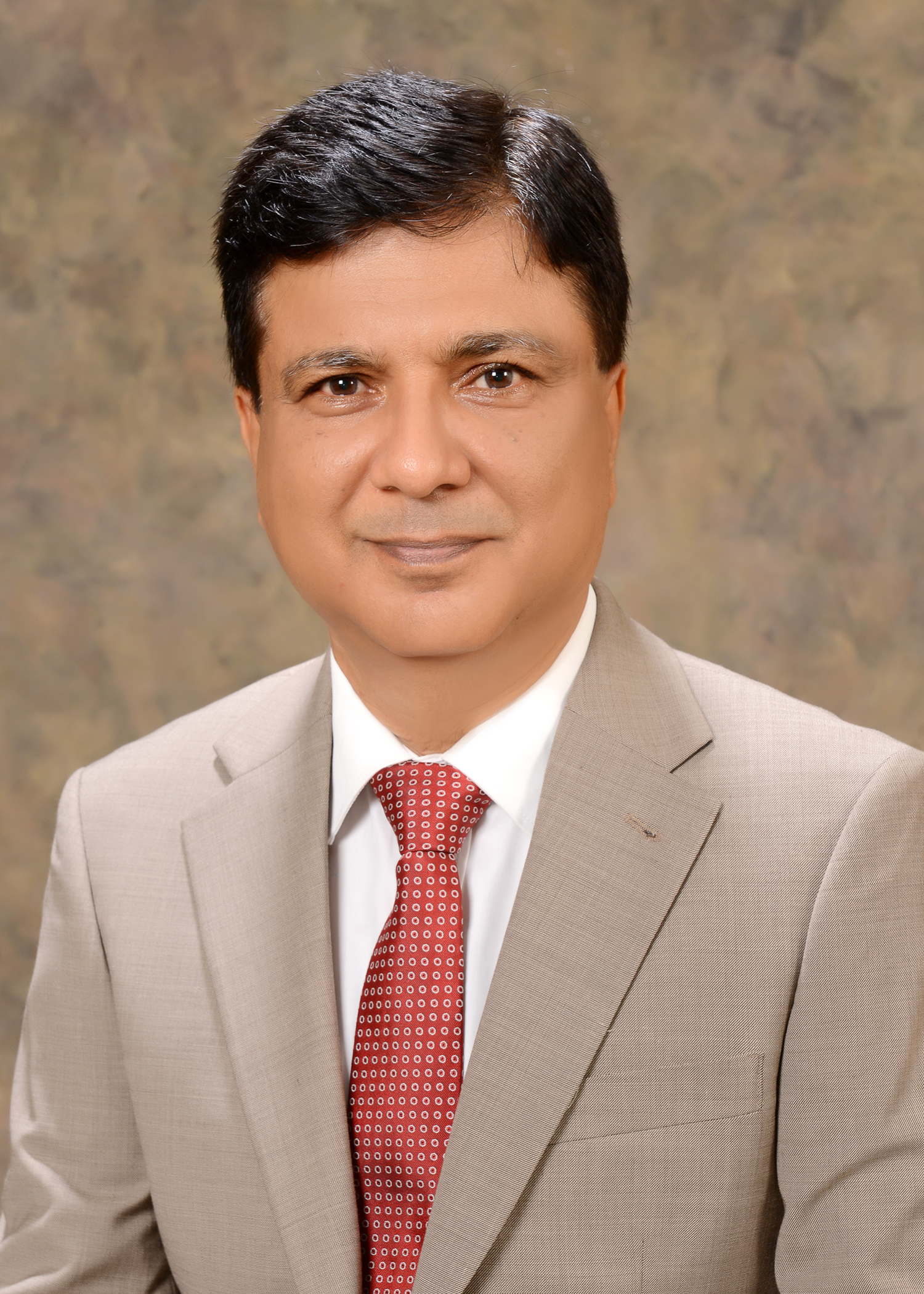
Prof.Dr Saeed Ahmed Mahar
MBBS (Sindh) FCPS (PAK) FACP (US) FACE (US) FRCP (London)
Fellowship in Diabetes & Endocrinology (AKU)
Consultant Endocrinologist & Diabetologist
Head of Endocrine Services
National Institute of Cardiovascular Diseases
Karachi Pakistan
Dr. Saeed Mahar graduated from Liaquat University of Medical & Health Sciences, Jamshoro, Sindh, Pakistan, where he was awarded certificate of merit by the Prime Minister of the Islamic Republic of Pakistan. He completed his internal medicine residency from Dow University of Health Sciences & Civil Hospital Karachi, Pakistan & was certified as a Fellow in Internal Medicine from College of Physicians & Surgeons Pakistan.
Subsequently, he chose subspecialty of Endocrinology and completed a Fellowship in Diabetes, Endocrinology & Metabolism from Aga Khan University Karachi with a clinical attachment at St Bartholomew's Hospital, West Smithfield, London, United Kingdom and awarded best fellow in Diabetes, Endocrinology & Metabolism. He was awarded fellowship of American College of Physicians (FACP), Fellowship of American College of Endocrinology (FACE), and Fellowship of Royal college of Physicians London (FRCP).
His clinical interests include pre diabetes, diabetes type 1,2 and gestational , thyroid disorders (Hypothyroidism & Hyperthyroidism), lipid disorders, metabolic bone diseases, obesity, infertility and male sexual disorders.
He is an international and National speaker & educator for a number of topics in areas such as diabetes, obesity, osteoporosis, lipid management, thyroid disease and other endocrine problems and has published more than 30 articles in peer reviewed medical journals nationally and internationally.
He is a supervisor and Examiner for FCPS Endocrinology at College of Physicians & Surgeons Pakistan and other universities in Pakistan. He is also a member of the Endocrine faculty at College of Physicians and Surgeons Pakistan.
He is currently working as Professor of Medicine and Consultant Endocrinologist & Diabetologist and head of Endocrine services at National Institute of Cardiovascular Diseases (NICVD) Karachi, Pakistan. He is also serving as a Consultant Endocrinologist at Aga Khan University, Karachi, Pakistan. He is the past President of Pakistan Endocrine Society (2015-16). Moreover, he received the prestigious lifetime achievement award in 2018 for his outstanding services to Pakistan Endocrine society and Endocrinology in Pakistan. He is also the Past President of American Association of Clinical Endocrinologist Pakistan Chapter (2019-2020).
20 MARCH
| Time | Session |
|---|---|
|
10:30
12:00
|
Young Joo ParkSouth Korea
Moderator
Translating the Genetic Landscape of Thyroid Cancer to Precision Diagnosis and TherapyThyroid cancer is characterized by a relatively low mutational burden compared with other solid tumors, with recurrent alterations mainly involving BRAF, RAS, and various fusion genes. Several novel driver candidates have also been identified through next-generation sequencing studies. The frequency and pattern of these genomic alterations differ across thyroid cancer subtypes and are often associated with distinct histopathological phenotypes, providing valuable clues for differential diagnosis. Moreover, molecular subtypes defined by driver mutations are closely linked to tumor biology and clinical behavior, allowing more accurate prediction of disease aggressiveness and prognosis.
Most differentiated thyroid cancers (DTCs) harbor a single dominant driver alteration; however, acquisition of additional mutations such as TERT promoter, tumor suppressor genes, or PI3K–AKT pathway alterations may lead to dedifferentiation and progression to aggressive or metastatic disease. Advances in our understanding of these genetic alterations have refined the pathological classification of thyroid cancer and enabled improved prognostication, treatment selection, and follow-up strategies.
Importantly, the identification of actionable genetic alterations—including RET and NTRK fusions, as well as BRAF mutations—has revolutionized therapeutic approaches. Targeted agents such as selpercatinib, pralsetinib, larotrectinib, and entrectinib demonstrate substantial clinical efficacy with fewer adverse events than multikinase inhibitors, while dabrafenib plus trametinib has shown marked benefit in anaplastic thyroid cancer. With multiple targetable mutations being uncovered, incorporating comprehensive genomic testing into the diagnostic workflow is essential to guide precision therapy for patients with thyroid cancer.
103
|