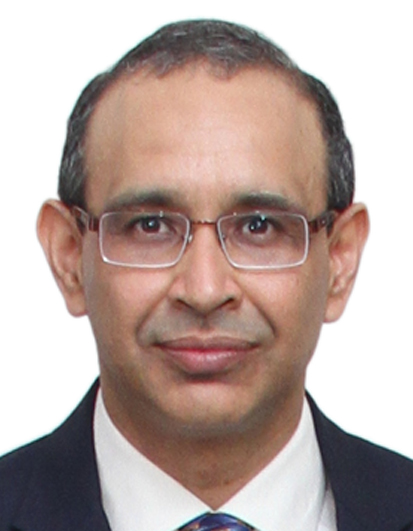
Sanjay KalraDr. India

Sanjay KalraDr.
Dr. Sanjay Kalra works as an endocrinologist at Bharti Hospital, Karnal, India. In his 25+years of endocrine practice, he has been a strong advocate of person centred endocrinology, focusing on clinical care, education, and research. Treasurer of the International Society of Endocrinology (ISE), he has served as Past President of the Endocrine Society of India (ESI), South Asian Federation of Endocrine Societies (SAFES), and Indian Professional Association for Transgender Health (IPATH). He is currently Vice President of the South Asian Obesity Forum, as well as Osteoporosis Society of India. Dr. Sanjay serves on the editorial board of numerous national and international journals and textbooks, and has authored/edited 1200+ PubMed-indexed articles and chapters. He serves as Section Editor of the PubMed-indexed textbook, Endo Text, as well as Editor in Chief, Endocrine Society of India Textbook of Endocrinology. He rounds off his working days with his favorite hobbies, the traditional Indian folk dance, bhangra, and his exercise companion, the mugdar (Indian bell club).

21 MARCH

Time Session
08:30
10:00
Addressing Psychological Burden and Enhancing Well-Being
Jung-Fu ChenTaiwan Moderator
Nitin KapoorIndia Moderator Changing Paradigms of Obesity Management in Asia-Oceania
  • Ye-Fong DuTaiwan Speaker Psychological Burden in Diabetes: Understanding Distress and Its Clinical ImpactDiabetes distress represents the emotional burden arising from the daily demands of diabetes self-management and is conceptually distinct from major depressive disorder. Large-scale epidemiological studies indicate that 20–40% of people with diabetes experience clinically significant distress, making it one of the most prevalent psychological complications of diabetes. A growing body of longitudinal evidence demonstrates that diabetes distress is strongly associated with poor glycemic control, reduced treatment adherence, unhealthy dietary and physical activity patterns, and lower engagement with healthcare services. Importantly, diabetes distress predicts future deterioration in HbA1c independent of depressive symptoms, suggesting that it is a direct and modifiable determinant of metabolic outcomes rather than a mere emotional comorbidity. Interventional studies show that structured diabetes education, psychosocial counseling, and digital health–based self-management support can significantly reduce diabetes distress and are accompanied by improvements in glycemic control and self-efficacy. These findings highlight the bidirectional relationship between psychological burden and metabolic regulation. In the era of precision medicine and digital diabetes care, systematic screening and targeted management of diabetes distress should be integrated into routine clinical practice to optimize both psychological well-being and long-term cardiometabolic outcomes.
  • Samuel ChenTaiwan Speaker Enhancing Patient Experience in Diabetes Care: Communication and Empowerment Strategies
  • Amandeep SinghIndia Speaker What Does Person-Centred Diabetes Care Really Mean in 2026?
  • Sanjay KalraIndia Speaker Creating Happiness in the Diabetes Clinic: A Psychosocial Approach to Better Outcomes
103