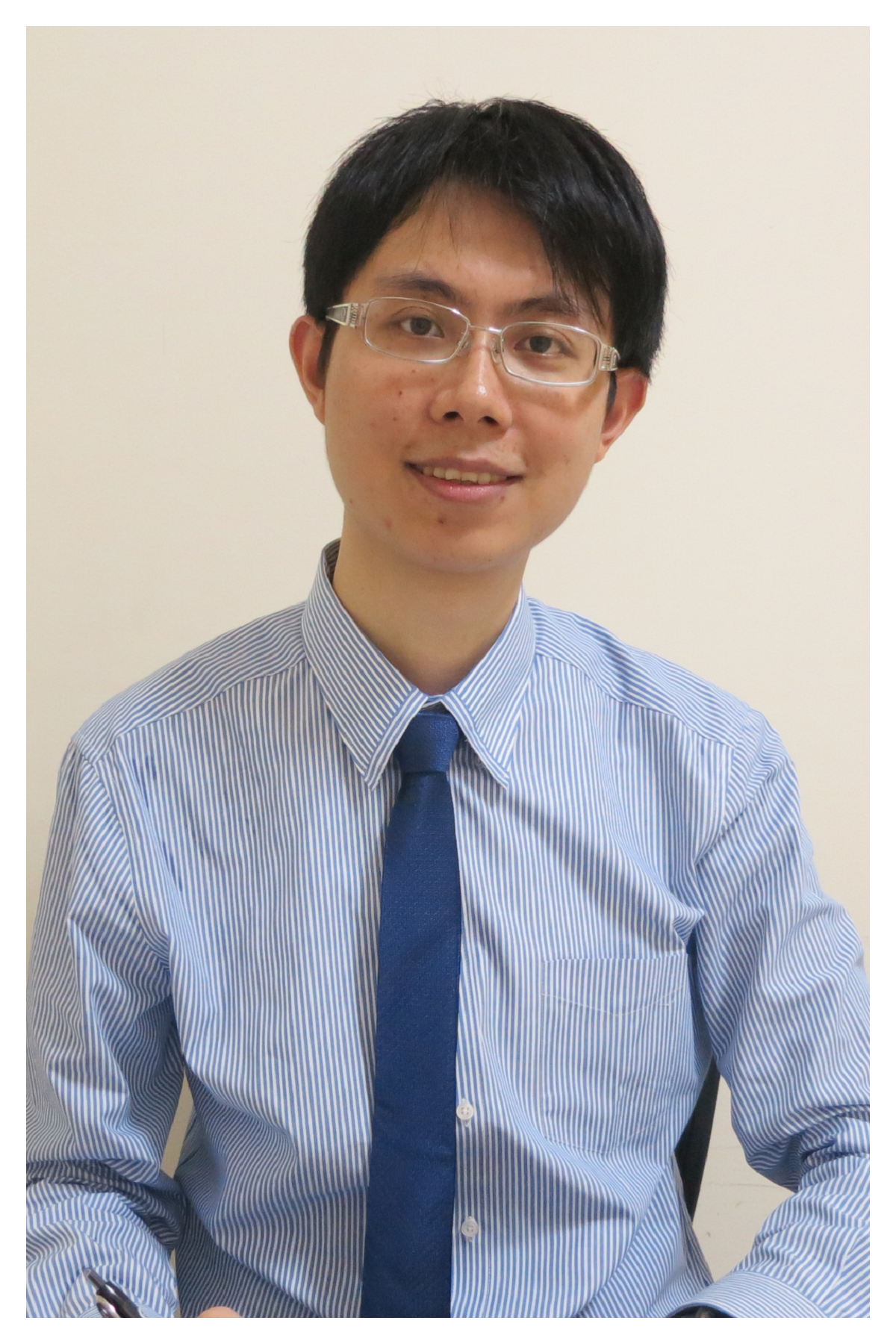
I am a physician-scientist with over ten years of experience in clinical medicine and academic research, primarily focused on diabetes in pregnancy and metabolic disorders. My specialty is endocrinology and metabolism. My previous work involved cohort studies, translational research, and data science, including a six-year prospective study involving 1,065 pregnant women with extensive biospecimen collection and follow-up, enabling robust investigations into early biomarkers and mechanistic pathways in gestational diabetes mellitus (GDM).
My recent research elucidated the role of placental angiopoietin-like protein 4 (ANGPTL4) in linking obesity to insulin resistance and GDM, integrating clinical biospecimen data with mechanistic cell-based assays. I have also conducted a randomized controlled trial, which investigated the effect of midpregnancy screening for GDM on pregnancy outcomes. As a first or corresponding author, I have published in high-impact journals, and my work has received recognition from the Taiwanese Endocrinology Society and Diabetes Association.
21 MARCH
| Time |
Session |
|
|
08:30
10:00
|
Clinical Management of Obesity
-
-
Kang-Chih FanTaiwan
Speaker
AI-Driven Precision Drug Therapy: Tailoring Personalized Treatment for Type 2 Diabetes Type 2 diabetes (T2D) is a highly heterogeneous syndrome where "one-size-fits-all" algorithms often fail to address individual pathophysiological variations. While recent guidelines prioritize cardiorenal protection, the choice between second-line agents—particularly SGLT2 inhibitors versus GLP-1 receptor agonists—remains largely empirical. This "trial-and-error" paradigm frequently results in therapeutic inertia and suboptimal glycemic durability.
Artificial Intelligence (AI) and machine learning (ML) offer a paradigm shift from population-based guidelines to precision diabetology. By integrating high-dimensional data from electronic health records (EHR), continuous glucose monitoring (CGM), and omics profiles, AI models can now quantify heterogeneous treatment effects (HTE) at the individual level.
In this presentation, I will discuss:
1. Phenotypic Stratification: Moving beyond classic classification to identify data-driven clusters (e.g., severe insulin-resistant vs. age-related clusters) that dictate distinct disease trajectories.
2. Predictive Pharmacotherapy: Reviewing recent evidence where ML algorithms predict individual glycemic response and weight loss outcomes for specific drug classes. We will highlight how AI-driven decision support can optimize the selection between SGLT2 inhibitors and GLP-1 receptor agonists, maximizing efficacy while minimizing adverse events.
3. Real-World Implementation: Discussing the potential of leveraging large-scale longitudinal datasets, such as Taiwan’s National Health Insurance Research Database, to build robust, population-specific prediction models.
Bridging the gap between data science and clinical practice, this session aims to demonstrate how AI can empower clinicians to prescribe the right drug for the right patient at the right time, fundamentally transforming T2D management.Anti-Obesity Medications: Clinical Use Obesity is a chronic, relapsing neurobehavioral disease requiring long-term management. Recent guidelines have shifted the treatment goal from BMI-centric weight loss to a "health-centered" approach, focusing on the remission of weight-related complications. With the advent of nutrient-stimulated hormone-based therapies, we have entered an era where pharmacotherapy can achieve double-digit weight loss comparable to bariatric surgery, offering systemic organ protection.
In this session, we will navigate the clinical use of anti-obesity medications (AOMs) through three key dimensions based on the latest evidence:
1. Efficacy and Organ Protection: We will review the landmark trials establishing GLP-1 and dual GIP/GLP-1 receptor agonists as the cornerstone of treatment. Highlights include Semaglutide (STEP, SELECT, ESSENCE) and Tirzepatide (SURMOUNT, SUMMIT, SURMOUNT-OSA), demonstrating not only 15–20% weight loss but also breakthrough benefits in cardiovascular outcomes (MACE), heart failure with preserved ejection fraction (HFpEF), metabolic dysfunction-associated steatohepatitis (MASH), and obstructive sleep apnea (OSA).
2. Comorbidity-Directed Strategy: A practical framework for drug selection will be proposed, distinguishing between "Fat Mass Disease" (e.g., OSA, osteoarthritis), which benefits primarily from mechanical weight reduction, and "Sick Fat Disease" (e.g., T2D, CVD, MASH), which requires correction of adipose dysfunction. We will discuss how to prioritize agents like Semaglutide and Tirzepatide for high-risk profiles, while utilizing Naltrexone/Bupropion for emotional eating or Orlistat for patients requiring non-systemic options.
3. Asian Perspectives & Practical Management: We will present data confirming that Asian populations, who are highly sensitive to metabolic risks, achieve weight loss efficacy comparable to Western populations with Semaglutide and Tirzepatide (STEP-7, SURMOUNT-CN/J). Finally, we will address practical strategies for dose titration to mitigate GI adverse events and emphasize the necessity of chronic treatment to prevent weight regain.
This presentation aims to equip clinicians with a precision medicine approach, ensuring the right AOM is prescribed to maximize both weight reduction and holistic health outcomes.
-
102
|