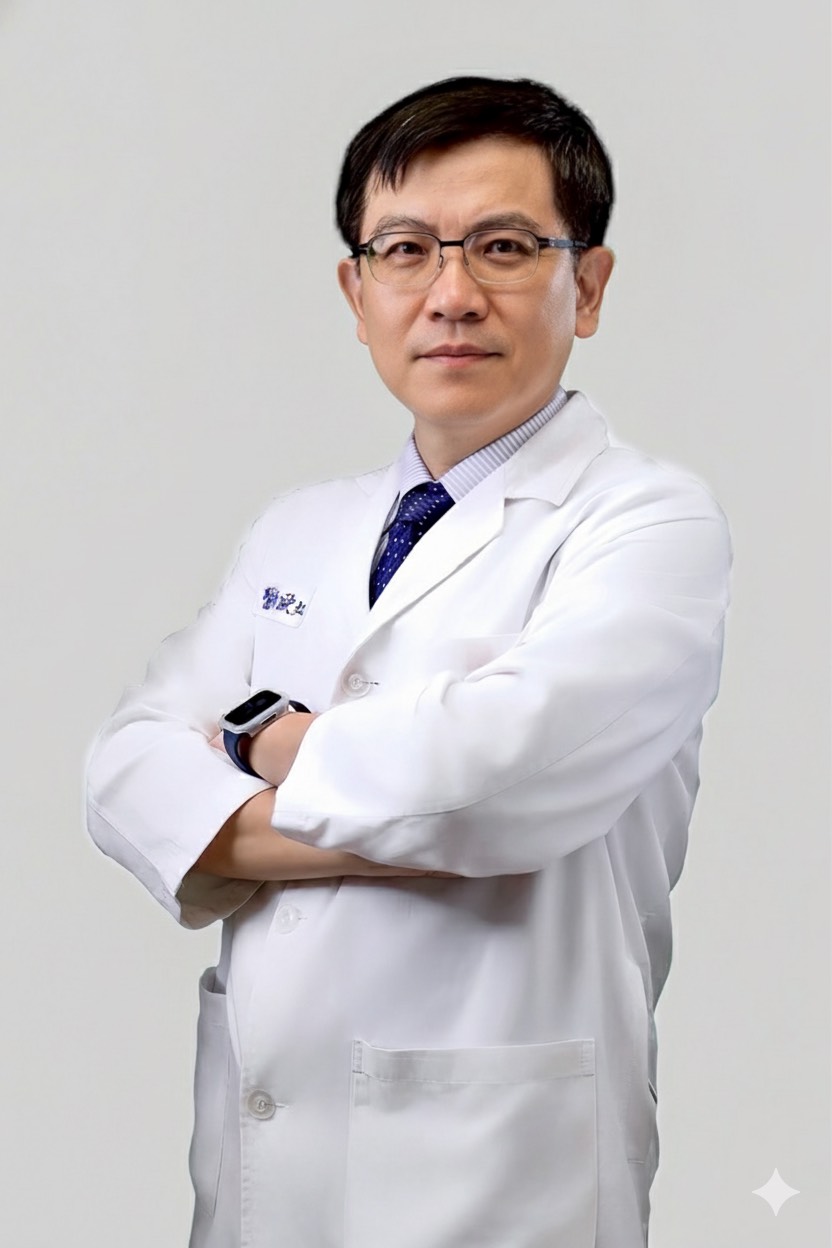
Horng-Yih Ou, MD, PhD, is a Professor of Medicine in the Department of Internal Medicine at the College of Medicine, National Cheng Kung University, and an attending endocrinologist at National Cheng Kung University Hospital (NCKUH), Tainan, Taiwan. He received his MD degree from Taipei Medical University and completed his PhD in Clinical Medicine at National Cheng Kung University. He subsequently completed residency training in Internal Medicine and fellowship training in Endocrinology, Diabetes, and Metabolism at NCKUH.
Dr. Ou is board-certified in Internal Medicine, Endocrinology and Metabolism, and Obesity Medicine, and is also a certified diabetes educator. He currently serves as Director of the Division of Endocrinology and Metabolism and Director of the Diabetes Prevention and Management Center at NCKUH. Since 2023, he has also served as President of the Taiwanese Association of Diabetes Educators, where he has been actively involved in advancing diabetes education, interdisciplinary care, and national consensus development.
Dr. Ou’s clinical and research interests focus on diabetes and its complications, metabolic dysfunction-associated steatotic liver disease (MASLD), obesity, cardiometabolic risk, and translational endocrinology. He has published extensively in peer-reviewed international journals and has contributed as a corresponding or co-corresponding author to multiple national and regional consensus statements on diabetes care, lipid management, diabetic kidney disease, and metabolic liver disease. His research integrates clinical epidemiology, mechanistic studies, and real-world data to improve patient-centered endocrine care.
In addition to his academic and clinical roles, Dr. Ou is actively involved in international scientific collaboration and conference organization, serving on scientific committees and as co-chair of major regional endocrine and diabetes meetings. His work reflects a strong commitment to bridging clinical practice, research innovation, and professional education in endocrinology.
21 MARCH
| Time |
Session |
|
|
08:30
10:00
|
Supervised by Department of Life Sciences, National Science and Technology Council (NSTC)
-
Tai-Shuan LaiTaiwan
Speaker
Chronic Kidney Disease: Illuminating Disease Pathways Through Data Science Chronic kidney disease (CKD) represents an escalating global health burden, affecting more than 800 million individuals worldwide and contributing substantially to end-stage kidney disease, cardiovascular morbidity, and premature mortality. Although numerous epidemiological studies have identified potential CKD risk factors, progress in prevention and disease-modifying therapies has been hindered by the difficulty of distinguishing causal determinants from non-causal associations. The rapid expansion of large-scale biobanks, together with advances in genetic epidemiology—particularly genome-wide association studies (GWAS) and Mendelian randomization (MR)—offers an important opportunity to address these challenges and advance translational CKD research.
In this session, we present an integrated, data-driven framework for investigating CKD pathogenesis by combining GWAS and MR, with a particular emphasis on insights derived from East Asian populations. Using the Taiwan Biobank, which comprises more than 180,000 extensively phenotyped participants with genome-wide data, we illustrate how genetic approaches can complement conventional observational analyses and support the development of precision nephrology.
We first highlight Mendelian randomization as a quasi-experimental approach that exploits the random allocation of genetic variants at conception to strengthen causal inference. Using hyperuricemia as a representative example, we demonstrate how robust observational associations with incident CKD may not necessarily reflect causality. While elevated serum urate levels were consistently associated with increased CKD risk in traditional analyses, multiple MR methods using both individual-level and summary-level data did not support a causal effect on kidney disease progression. These findings are consistent with recent randomized clinical trials and underscore the value of MR in prioritizing therapeutic targets.
We next extend the MR framework to complex and correlated biological systems through multivariable Mendelian randomization. Focusing on thyroid-related traits, including thyroid-stimulating hormone and free thyroxine, we show how multivariable MR can disentangle intertwined endocrine influences on kidney function. Across East Asian and European populations, genetically predicted thyroid-stimulating hormone exhibited a consistent causal inverse association with estimated glomerular filtration rate, whereas free thyroxine showed no independent causal effect. This example highlights the ability of MR to clarify mechanistic pathways that are difficult to resolve using observational data alone.
Beyond causal inference, we demonstrate the value of GWAS in uncovering novel genetic determinants of CKD-related traits. A multi-trait GWAS approach using MTAG was applied to jointly analyze urinary albumin-to-creatinine ratio and kidney function, substantially enhancing discovery power. This strategy identified multiple novel loci associated with albuminuria in an East Asian population and implicated biologically relevant pathways, including proximal tubular albumin endocytosis and primary cilia function. Integrative gene prioritization incorporating kidney-specific expression quantitative trait loci, deleteriousness metrics, and Mendelian kidney disease gene databases further strengthened biological interpretation.
Finally, we introduce trajectory GWAS as an innovative approach that leverages repeated measurements of kidney function to identify genetic determinants of longitudinal eGFR decline. By modeling kidney function trajectories rather than cross-sectional measures, this method revealed loci associated with progressive kidney function loss that were not detected by conventional GWAS designs.
Conclusion.
Taken together, the integration of GWAS, Mendelian randomization, and longitudinal biobank analyses provides a robust framework for improving causal understanding of CKD. Continued accumulation of high-quality population-specific data and international collaboration will be essential for translating these insights into clinical research and future strategies for CKD prevention and management.
-
Hung-Tsung WuTaiwan
Speaker
Investigating the Pathophysiological Role of Sweet Taste Receptor in the Development of Diabetes
Horng-Yih OuTaiwan
Moderator
Investigating the Pathophysiological Role of Sweet Taste Receptor in the Development of Diabetes-
3F Banquet Hall
|